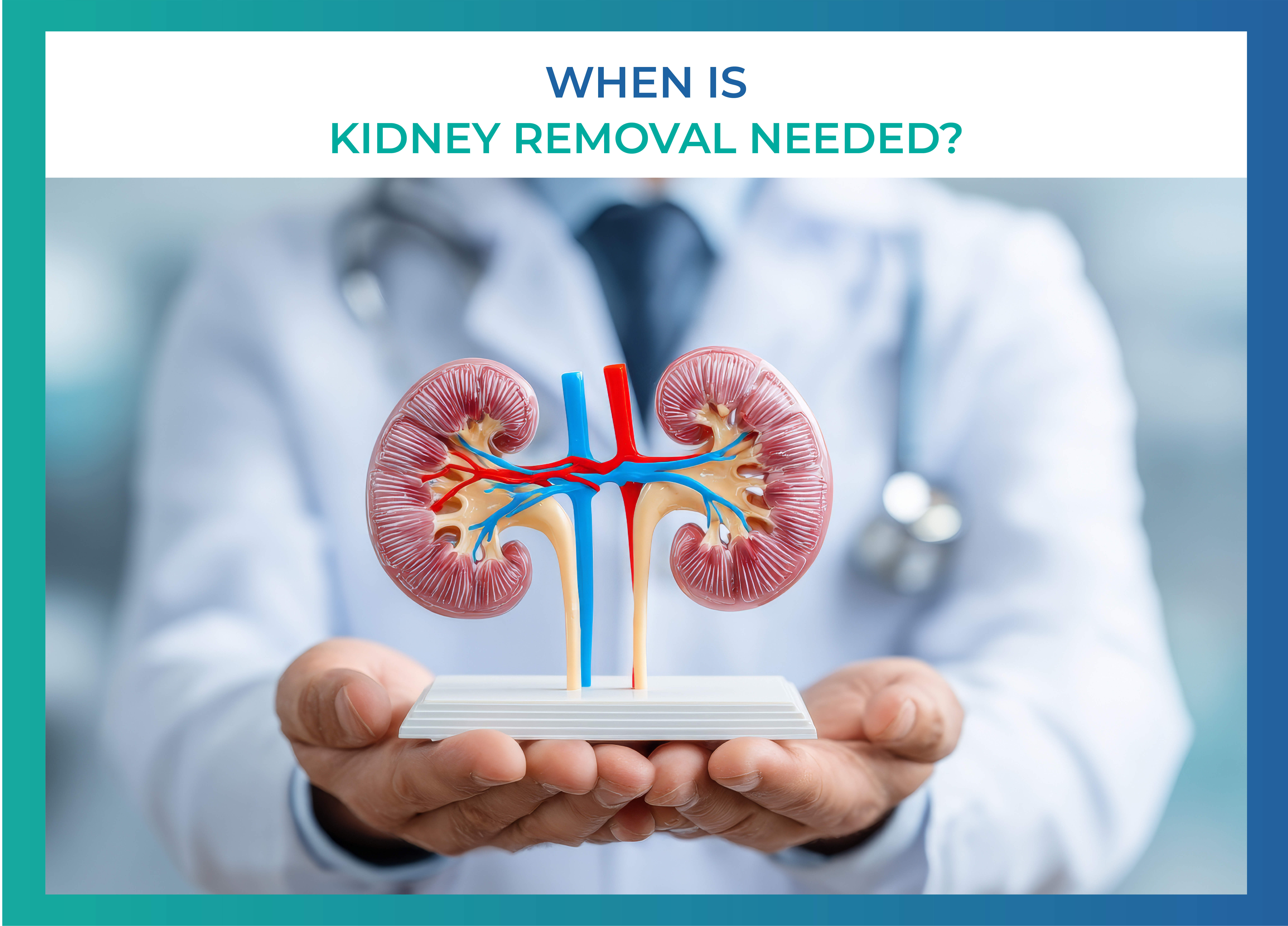
When Is Kidney Removal Needed?
Kidneys are among the most important organs in the human body. They work silently every day to filter waste, remove toxins, balance fluids, regulate blood pressure, and maintain overall health. Most people rarely think about their kidneys—until a serious kidney problem develops.
In some situations, kidney disease or damage becomes so severe that doctors may recommend removing part or all of the kidney. This procedure is known as kidney removal surgery or nephrectomy.
Hearing that a kidney may need to be removed can be emotionally overwhelming. Patients often wonder:
- Is kidney removal really necessary?
- Can I survive with one kidney?
- Will I need dialysis?
- Is there any alternative to surgery?
- What is recovery like after kidney removal?
Understanding why kidney removal becomes necessary can help patients feel more informed and less anxious about treatment decisions.
According to Dr. Vijay Patel, early diagnosis and timely treatment play a major role in preventing severe kidney damage. However, when the kidney becomes permanently damaged, infected, cancerous, or non-functional, nephrectomy may become the safest and most effective treatment option.
What Is Kidney Removal Surgery?
Kidney cancer begins when cells in the kidney start growing uncontrollably. Instead of dying like normal cells, they continue multiplying and may form a tumor.
Kidney removal surgery, medically called nephrectomy, is a
surgical procedure in which part or all of a kidney is removed.
Depending on the medical condition, doctors may perform:
- Partial Nephrectomy: Only the diseased or damaged portion of the kidney is removed while preserving the healthy part.
- Simple Nephrectomy: One complete kidney is removed.
- Radical Nephrectomy: The entire kidney, surrounding tissue, and sometimes nearby lymph nodes are removed, especially in kidney cancer cases.
Modern surgical advancements now allow many kidney surgeries to be performed through minimally invasive laparoscopic or robotic-assisted techniques, resulting in:
Patients consulting Dr. Vijay Patel often receive detailed evaluation before surgery to determine whether kidney preservation is possible.
Can a Person Live With One Kidney?
Yes, absolutely.
Many people live healthy and normal lives
with just one functioning
kidney. In fact:
-
Some people are born
with one kidney
Many kidney cancers grow slowly over years. Some tumors increase only a few millimeters per year. - Some donate one kidney
- Others have one kidney removed due to disease
The remaining kidney usually adapts and performs the work of both kidneys effectively.
However, maintaining long-term kidney health becomes extremely important after surgery. Patients are advised to:
- Stay hydrated
- Control blood pressure
- Manage diabetes properly
- Avoid smoking
- Limit excessive salt intake
- Avoid unnecessary painkillers
- Get regular kidney checkups
A trusted Dr. Vijay Patel helps patients understand how to protect the remaining kidney after nephrectomy.
When Is Kidney Removal Needed?
Kidney removal is usually recommended only when the kidney cannot be saved or when keeping the kidney becomes dangerous for the patient’s health.
Below are the most common reasons why kidney removal may become necessary.
-
1. Kidney Cancer: One of the leading causes of kidney removal surgery
is kidney cancer.Kidney cancer develops when abnormal cells grow uncontrollably
inside the kidney. In many cases, symptoms may not appear in the early stages, which
is why regular health checkups are important.
Symptoms of Kidney Cancer
Common warning signs include:- Blood in urine
- Persistent back or side pain
- Fatigue
- Fever
- Weight loss
- Lump or swelling in the abdomen
If diagnosed early, surgery offers excellent chances of cure.
Patients seeking advanced Kidney Cancer Treatment in South Mumbai are often evaluated carefully to determine whether:
- Partial kidney removal is possible
- Partial kidney removal is possible
- Complete kidney removal is necessary
- Additional cancer treatment is needed
According to Dr. Vijay Patel, preserving kidney function remains a priority whenever medically possible.
- 2. Severe Kidney
Infections:
Conditions like:
- Chronic pyelonephritis
- Recurrent urinary tract infections (UTIs)
- Kidney abscesses
Can slowly destroy kidney function over time.
A severely infected kidney may become:
- Painful
- Scarred
- Non-functional
- A source of ongoing infection
In such situations, removing the damaged kidney may prevent life-threatening complications such as:
- Sepsis
- Spread of infection
- Severe inflammation
Patients experiencing repeated fever, burning urination, or flank pain should never ignore these symptoms.
- 3. Non-Functioning
Kidney
: Sometimes a kidney stops working completely.
This may happen due to:- Long-term obstruction
- Severe kidney stones
- Congenital abnormalities
- Chronic infections
- Reduced blood supply
- Other underlying kidney disease
A non-functioning kidney may still cause:
- Chronic pain
- Recurrent infections
- High blood pressure
- Swelling
If scans show that the kidney contributes little or no function, nephrectomy may be advised.
An experienced Dr. Vijay Patel carefully evaluates kidney function before recommending surgery.
- 4. Large Kidney
Stones Causing Permanent Damage
Kidney stones are common, but untreated large stones can become dangerous.
Over time, large stones can block urine flow and cause:- Hydronephrosis
- Severe infections
- Kidney swelling
- Permanent tissue damage
If the kidney becomes irreversibly damaged, removal may become necessary.
Early treatment of kidney stones can often prevent nephrectomy.
- 5. Traumatic Kidney
Injury:
: Severe accidents or trauma may seriously damage the kidneys. Common causes include:
- Road traffic accidents
- Sports injuries
- Falls
- Blunt abdominal trauma
Minor injuries may heal naturally, but severe kidney damage with uncontrolled bleeding may require emergency surgery.
In life-threatening situations, kidney removal may save the patient’s life.
- 6. Polycystic
Kidney Disease (PKD):
Polycystic Kidney Disease is a genetic condition in which multiple cysts develop inside the kidneys.
Over time, the kidneys may become:
- Enlarged
- Painful
- Infected
- Bleeding
In severe cases, patients may need kidney removal before undergoing transplantation.
Patients under the care of Dr. Vijay Patel receive advanced treatment planning for complex kidney diseases like PKD.
- 7. Kidney Donation
for Transplant
Healthy individuals may choose to donate one kidney to help someone suffering from kidney failure
Living kidney donation has become increasingly successful due to:
- Advanced surgical techniques
- Better recovery protocols
- Improved transplant outcomes
Before donation, doctors perform extensive tests to ensure the donor is healthy enough to live safely with one kidney..
- 8. Severe Urinary
Obstruction
When urine flow becomes blocked for a long time, the kidney can gradually stop functioning.
Common causes include:
- Ureter blockage
- Enlarged prostate
- Tumors
- Scar tissue
- Congenital abnormalities
Long-standing obstruction can permanently damage the kidney and may eventually require removal.
Symptoms That May Indicate Serious Kidney Disease
Kidney disease often develops silently.
Many patients do not notice symptoms until the condition becomes advanced.
- Blood in urine
- Foamy urine
- Swelling in feet or face
- Persistent fatigue
- Loss of appetite
- High blood pressure
- Back or side pain
- Frequent urinary infections
- Reduced urine output
Early consultation with a Dr. Vijay Patel may help prevent permanent kidney damage.
Tests Done Before Kidney Removal Surgery
Before recommending nephrectomy, doctors perform detailed evaluations.
-
1. Blood Tests: These assess:
- Kidney function
- Infection
- Electrolyte levels
- Anemia
-
2. Urine Tests: These help detect:
- Infection
- Protein leakage
- Blood in urine
-
3. Imaging Scans: Common imaging tests include:
- Ultrasounds
- CT scan
- MRI
- Nuclear kidney scan
These scans help determine:
- Kidney function
- Tumor size
- Blockages
- Structural damage
- 4. Biopsy: In some cases, a small tissue sample may be taken for diagnosis.
Types of Kidney Removal Surgery
-
1. Open Surgery: Traditional surgery involving a larger incision.
Usually performed for:- Large tumors
- Complex cancer cases
- Severe trauma
-
2. Laparoscopic Surgery A minimally invasive procedure using small cuts
and a camera.
Benefits include:
- Less pain
- Faster recovery
- Smaller scars
- Shorter hospital stay
- 3. Robotic-Assisted Surgery Advanced robotic systems help improve surgical precision and recovery outcomes.