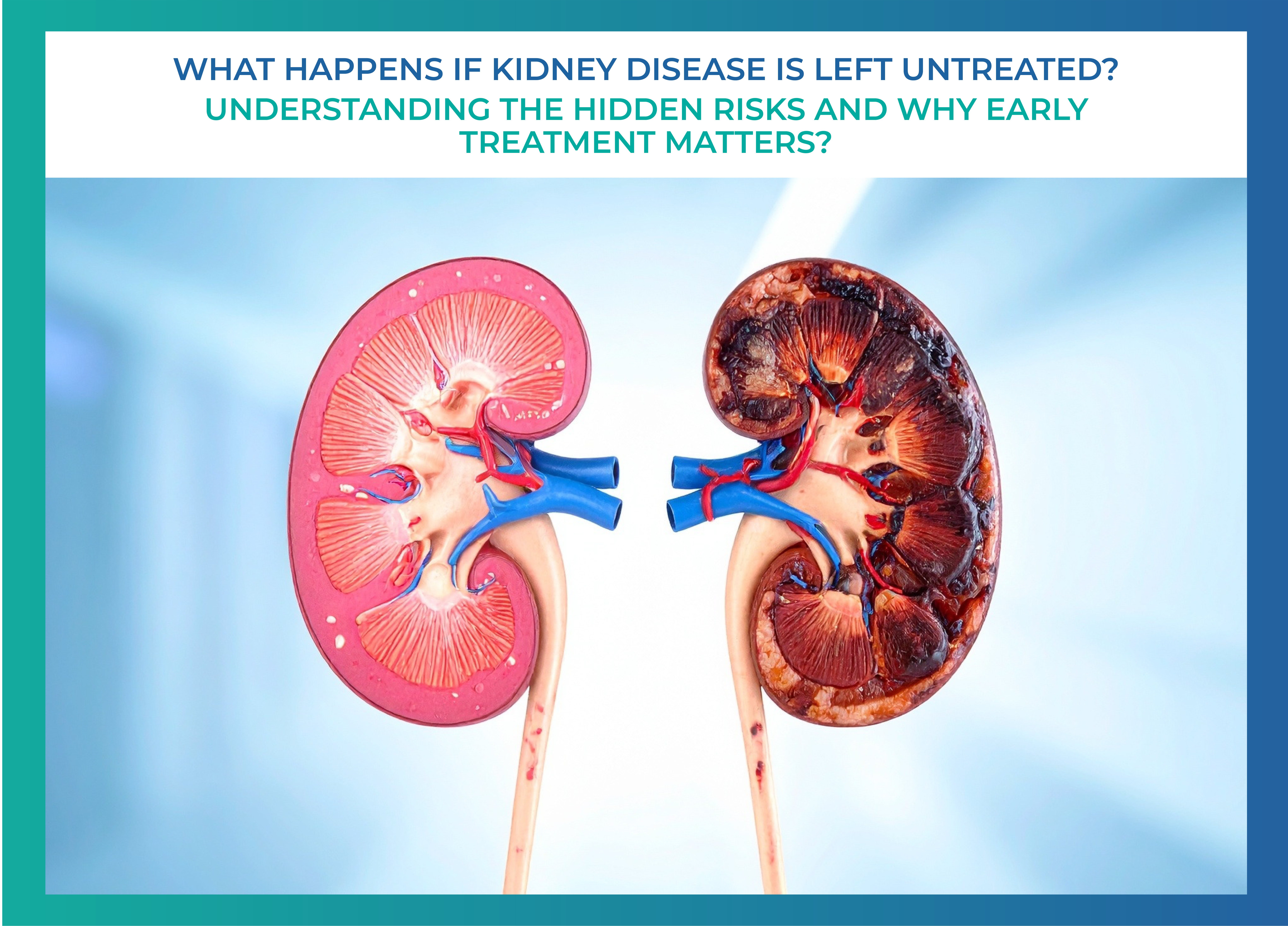
What Happens If Kidney Disease Is Left Untreated? Understanding the
Hidden Risks and Why Early Treatment Matters?
Kidney disease is often referred to as a “silent killer”
because it can develop gradually without causing noticeable symptoms in its early stages.
Many people continue with their daily lives, unaware that their kidneys are slowly losing
the ability to filter waste, regulate fluids, and maintain the body’s delicate balance. By
the time obvious symptoms appear, a significant amount of kidney function may already be
permanently lost.
Ignoring kidney disease or delaying treatment can have serious consequences. The kidney
perform several life-sustaining functions, including removing toxins from the blood,
balancing electrolytes, regulating blood pressure, supporting healthy bones, and producing
hormones that help make red blood cells. When these functions begin to fail, the effects are
felt throughout the entire body not just in kidneys.
The good news is that early diagnosis and timely treatment can significantly slow the
progression of kidney disease and reduce the risk of complications. If you are experiencing
symptoms or have risk factor such as diabetes or high blood pressure, consulting Dr. Vijay
Patel, widely recognized as one of the best nephrologist in South Mumbai, can help protect
your kidney health before irreversible damage occurs.
Understanding Kidney Disease
Your kidneys are two bean shaped organs located on either side
of your spine, just below the rib cage. Every day, they filter nearly 180 litres of blood,
removing waste products, toxins, and excess water while maintaining the correct balance of
minerals such as sodium, potassium, calcium, and phosphorus. Healthy kidneys also help
regulate blood pressure, produce hormones that stimulate red blood cell production, and
activate vitamin D for strong bones.
Kidney disease develops when the kidneys gradually lose their
ability to perform these essential function. While some cases occur suddenly due to
infection, dehydration, or medication-related injury, the majority of patients develop
chronic kidney disease (CKD), a progressive condition that worsens over months or years.
Diabetes and high blood pressure remain the two leading causes
of chronic kidney disease worldwide. Other causes include recurrent kidney infections,
kidney stones, inherited disorders like polycystic kidney disease, autoimmune diseases,
obesity, smoking, prolonged use of painkillers, and certain medications. Since kidney
disease often progresses silently, regular health check-ups with a Kidney Specialist in
South Mumbai are essential for people at higher risk.
Why Kidney Disease Often Goes Undetected?
One of the most dangerous aspects of kidney disease is that
symptoms usually do not appear during the early stages. The kidneys have a remarkable
ability to compensate for damage, allowing them to continue functioning even after losing a
substantial portion of their filtering capacity. As a result, many patients do not realise
there is a problem until kidney function has already declined significantly.
When symptoms finally begin to appear, they are often vague
and easily mistaken for other health conditions. Persistent tiredness, swelling around the
ankles or eyes, changes in urination, poor appetite, nausea, muscle cramps, itchy skin, and
difficulty concentrating may all indicate declining kidney function. Because these symptoms
develop gradually, many individuals ignore them or attribute them to ageing, stress, or
fatigue, delaying the medical attention they urgently need.
What Happens If Kidney Disease Is Left Untreated?
Leaving kidney disease untreated affects far more than the
kidneys themselves. Since these organs play a central role in maintaining the body's
internal balance, declining kidney function can trigger complications involving the heart,
bones, blood, nerves, lungs, and immune system. As the disease progresses, these
complications become increasingly severe and may eventually threaten life itself.
Waste Products Begin Accumulating in the Blood
Healthy kidneys continuously remove waste products generated
through normal metabolism. When kidney function declines, these toxins gradually accumulate
in the bloodstream, a condition known as uremia. This toxic buildup affects almost every
organ in the body.
Patients often begin experiencing constant fatigue, nausea,
vomiting, poor appetite, difficulty concentrating, headaches, disturbed sleep, and a
persistent metallic taste in the mouth. Some people also develop unpleasant breath odour due
to the accumulation of waste products. As toxin levels continue rising, patients may become
confused, extremely weak, and eventually require emergency dialysis if treatment is delayed.
Excess Fluid Starts Collecting Throughout the Body
Another major function of healthy kidneys is maintaining the
body's fluid balance. Damaged kidneys lose their ability to remove excess water effectively,
causing fluid to accumulate in different parts of the body.
Initially, patients may notice swelling around the ankles
after standing for long periods. As kidney disease worsens, swelling can spread to the legs,
feet, hands, and face. Some people wake up with puffiness around their eyes, while others
experience rapid weight gain caused by fluid retention rather than body fat. In advanced
kidney disease, excess fluid may even accumulate inside the lungs, making breathing
difficult and increasing the risk of heart failure.
High Blood Pressure Continues to Worsen
The kidneys and blood pressure are closely connected. Damaged
kidneys often cause high blood pressure, while uncontrolled high blood pressure further
damages the kidneys. This creates a vicious cycle that accelerates kidney failure.
Many patients continue taking medications without realising
that poorly controlled blood pressure is silently damaging their kidneys every day. Unless
kidney disease is identified and treated, blood pressure becomes increasingly difficult to
manage, significantly increasing the risk of stroke, heart attack, and heart failure.
Untreated Kidney Disease Increases the Risk of Heart Disease
Most people associate kidney disease only with dialysis, but
they are often surprised to learn that cardiovascular disease is actually the leading cause
of death among patients with chronic kidney disease.
When kidney function declines, high blood pressure, chronic
inflammation, fluid overload, anaemia, and electrolyte imbalances place enormous strain on
the heart. Over time, this increases the risk of heart attacks, irregular heart rhythms,
enlarged heart muscles, heart failure, and stroke. Protecting kidney health therefore plays
an equally important role in protecting heart health.
Anaemia Develops as Kidney Function Declines
Healthy kidneys produce a hormone called erythropoietin, which
stimulates the bone marrow to produce red blood cells. As kidney disease progresses,
production of this hormone decreases, leading to anaemia.
People with kidney-related anaemia often complain of extreme
tiredness, weakness, dizziness, breathlessness during physical activity, poor concentration,
and pale skin. Many mistakenly assume these symptoms are simply due to ageing or stress
when, in reality, they reflect worsening kidney function.
Bones Become Weak and Fragile
Few people realise that healthy kidneys are essential for
maintaining strong bones. They activate vitamin D and regulate calcium and phosphorus levels
in the body. When kidney disease progresses untreated, these minerals become imbalanced.
Over time, patients may develop weak bones, bone pain, joint
stiffness, muscle weakness, and an increased risk of fractures. This condition, known as
Chronic Kidney Disease-Mineral and Bone Disorder (CKD-MBD), significantly affects quality of
life if left untreated.
Dangerous Electrolyte Imbalances Can Develop
The kidneys carefully regulate essential minerals that help
muscles, nerves, and the heart function properly. Advanced kidney disease often causes
potassium levels to rise dangerously high.
High potassium may not produce obvious symptoms initially, but
it can suddenly trigger life-threatening heart rhythm abnormalities and even cardiac arrest.
Similarly, abnormal sodium and calcium levels may affect brain function, muscle activity,
and nerve conduction, making timely treatment essential.
The Nervous System Also Suffers
As waste products accumulate in the bloodstream, they begin
affecting the nervous system. Patients may notice tingling sensations in their hands and
feet, burning pain, numbness, muscle weakness, restless legs syndrome, difficulty sleeping,
poor memory, and trouble concentrating.
In severe untreated kidney disease, toxin buildup can even
cause confusion, seizures, or loss of consciousness, highlighting the importance of early
medical intervention.
The Immune System Becomes Weaker
Untreated kidney disease also weakens the immune system,
making it more
difficult for the body to fight infections. Patients become increasingly vulnerable to
urinary tract
infections, respiratory infections, skin infections, and bloodstream infections.
Repeated infections further stress the kidneys, creating
another
cycle that accelerates disease progression.
Kidney Disease Can Progress to Kidney Failure
Without proper treatment, chronic kidney disease continues to
worsen until the kidneys lose nearly all their filtering ability. This stage is known as
End-Stage
Kidney Disease (ESKD) or kidney failure.
At this point, the kidneys can no longer remove toxins or
maintain
fluid and electrolyte balance. Patients require lifelong dialysis or a kidney transplant to
survive.
Although these treatments are life-saving, they significantly impact lifestyle, work,
travel, and
quality of life. Early treatment aims to delay or completely prevent reaching this stage.
Who Is Most at Risk?
Certain individuals have a much higher likelihood of
developing
chronic kidney disease. People living with diabetes, hypertension, obesity, cardiovascular
disease,
recurrent kidney stones, autoimmune disorders, or a family history of kidney disease should
undergo
regular kidney screening. Older adults and individuals who frequently use painkillers
without medical
supervision are also at increased risk.
If you belong to any of these high-risk groups, regular
consultations
with Dr. Vijay Patel, a trusted Kidney Doctor in South Mumbai, can help detect kidney
disease before
complications develop.
How Kidney Disease Is Diagnosed?
Modern diagnostic tests make early detection of kidney disease
relatively simple. Blood tests measuring serum creatinine and estimating the glomerular
filtration rate (eGFR) provide valuable information about kidney function. Urine tests help
detect protein leakage, blood, or infection, while ultrasound scans evaluate kidney size,
structure, and possible obstruction. Depending on the underlying condition, additional tests
may be recommended to identify the exact cause and stage of kidney disease.
Can Kidney Disease Be Prevented from Getting Worse?
Although chronic kidney disease cannot always be reversed, its
progression can often be slowed significantly through early diagnosis and appropriate
treatment. Managing diabetes and blood pressure effectively, following a kidney-friendly
diet, maintaining a healthy weight, quitting smoking, exercising regularly, staying
hydrated, avoiding unnecessary painkillers, and attending regular follow-up appointments all
contribute to preserving kidney function for as long as possible.
Patients receiving expert care from an experienced
Nephrologist in South Mumbai often enjoy a better quality of life and delay the need for
dialysis through personalised treatment plans.
When Should You See a Kidney Specialist?
Many people wait until symptoms become severe before
consulting a nephrologist, but early evaluation is always the better approach. If you notice
swelling in your legs or face, blood in the urine, persistent foamy urine, uncontrolled high
blood pressure, frequent urinary infections, kidney stones, unexplained fatigue, or abnormal
kidney function tests, it is important to seek medical attention without delay.
Consulting Dr. Vijay Patel, recognised by many patients as the
Best Nephrologist in Nana Chowk and a leading Kidney Specialist Doctor in South Mumbai,
allows timely diagnosis, comprehensive treatment, and long-term kidney protection.
Kidney disease is not simply a problem affecting one organ—it
is a progressive condition that can influence nearly every system in the body. Left
untreated, it may lead to toxin buildup, fluid overload, uncontrolled hypertension, heart
disease, anaemia, weak bones, nerve damage, weakened immunity, and ultimately kidney failure
requiring dialysis or transplantation. Because early kidney disease often develops silently,
waiting for symptoms to appear can mean missing the opportunity to preserve valuable kidney
function.
Fortunately, early diagnosis and expert medical care can slow
disease progression and significantly improve long-term outcomes. Regular screening is
especially important for individuals with diabetes, hypertension, obesity, or a family
history of kidney disease.
If you are looking for the Best Kidney Care in South Mumbai,
schedule a consultation with Dr. Vijay Patel, one of the Best Nephrologists in South Mumbai
and an experienced Best Kidney Transplant Specialist in South Mumbai. Early intervention
today can help protect your kidneys and your overall health for years to come.