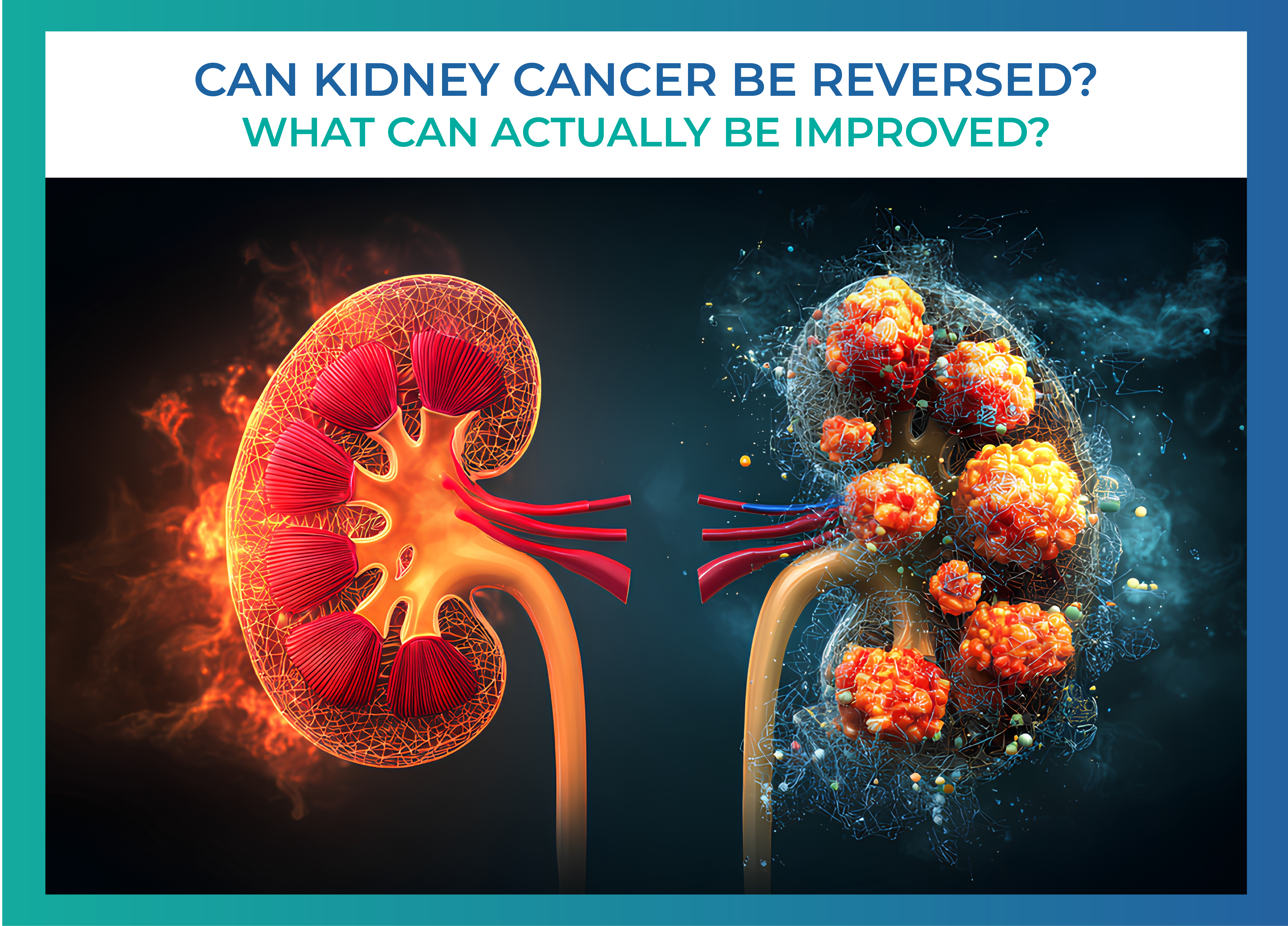
Can Kidney Cancer Be Reversed? What Can Actually Be Improved?
A diagnosis of kidney cancer can immediately raise one of the
most difficult questions for patients
and families: Can kidney cancer be reversed? The answer depends on several factors,
including the
type of kidney cancer, its stage, tumour size, whether it has spread, the patient's
overall health and
how the cancer responds to treatment. In many people with kidney cancer that is detected
while it is
still confined to the kidney, treatment can potentially remove the cancer completely and may
be
curative. However, advanced kidney cancer is different. It may not always be possible to
completely
eliminate the disease, but modern treatments can sometimes shrink tumours, slow cancer
growth,
control symptoms and help patients live longer.
It is also important to understand that "reversing kidney
cancer" is not the same as simply improving
kidney function. Cancer treatment focuses on controlling or removing cancer, while kidney
care
focuses on protecting the remaining healthy kidney tissue and maintaining kidney function.
This is
where coordinated care with an experienced kidney specialist becomes important.
For patients looking for a Kidney specialist in South Mumbai,
Kidney Doctor in South Mumbai or
Nephrologist in South Mumbai, understanding both the cancer and the health of the kidneys
can
help in making better treatment decisions
Can Kidney Cancer Be Completely Cured?
In selected cases, yes. Kidney cancer that has not spread
outside the kidney can often be treated
successfully, particularly when the tumour is detected at an early stage. The National
Cancer
Institute notes that renal cell cancer can often be cured when it is diagnosed while still
localized to
the kidney and nearby tissues. The probability of cure is strongly related to how far the
cancer has
spread.
For early kidney cancer, surgery is commonly the main
treatment. Depending on the size and
location of the tumour and the patient's individual circumstances, doctors may recommend
a partial
nephrectomy, which removes the tumour while preserving as much healthy kidney tissue as
possible, or a radical nephrectomy, which removes the affected kidney
The goal is not simply to remove the tumour. An important part
of treatment planning is also to
preserve kidney function whenever it is medically and technically possible
This distinction matters because a patient may successfully
undergo cancer treatment but still need
long-term monitoring of kidney function. Working with a Kidney specialist doctor in South
Mumbai
can therefore be valuable before and after cancer treatment.
What Does "Reversing" Kidney Cancer Actually Mean?
When patients ask whether kidney cancer can be reversed, they
may actually be asking several
different questions.
They may want to know whether the tumour can disappear. They may want to know whether
surgery can remove the cancer completely. They may be asking whether kidney function can
return
to normal after treatment. Or they may be concerned about whether cancer that has spread can
still
be controlled.
These are different situations.
If a localized tumour is completely removed and there is no evidence of cancer remaining,
doctors
may describe the patient as having no evidence of disease. However, follow-up remains
important
because kidney cancer can recur, sometimes years after the initial treatment.
If the cancer has spread to distant organs, treatment generally focuses on controlling the
disease.
Depending on the cancer type and individual circumstances, treatment may involve
immunotherapy,
targeted therapy, surgery or other approaches. Modern treatment has significantly expanded
the
options available for patients with advanced kidney cancer.
The First Thing That Can Be Improved: Early Detection
One of the most important factors that can improve outcomes is
detecting kidney cancer before it
spreads.
Kidney cancer may not always cause obvious symptoms in its early stages. Some patients may
discover a kidney tumour incidentally during an ultrasound, CT scan or MRI performed for
another
health concern.
Symptoms that can occur with kidney cancer include blood in the urine, persistent pain in
the side or
lower back, an abdominal lump, unexplained weight loss, tiredness, fever or changes in
general
health. However, these symptoms can also occur because of other medical conditions.
This is why persistent or unexplained symptoms should not be ignored?
If imaging shows a suspicious mass in the kidney, further evaluation is needed to determine
whether
it is cancerous and to understand its size, location and possible spread. CT and MRI can
play
important roles in evaluating renal masses and staging kidney cancer.
Can Kidney Cancer Be Reversed With Surgery?
For localized kidney cancer, surgery is often the most
important treatment.
A partial nephrectomy removes the tumour and a margin of
surrounding tissue while preserving the
rest of the kidney. When technically appropriate, this kidney-sparing approach can help
preserve
renal function.
A radical nephrectomy involves removing the entire affected
kidney and surrounding structures
when required by the extent or location of the cancer.
The choice between these procedures depends on factors such as
tumour size, tumour location, and
kidney function, the condition of the opposite kidney, overall health and the likelihood of
completely
removing the cancer.
The National Cancer Institute identifies surgery as the
mainstay of treatment for renal cell cancer,
with partial nephrectomy and radical nephrectomy being important options depending on the
clinical situation
The objective is therefore twofold: control the cancer and
protect as much healthy kidney function
as possible.
Can Small Kidney Tumours Be Treated Without Removing the Whole Kidney?
Not every patient with a kidney tumour requires removal of the
entire kidney.
For selected patients, particularly those with smaller tumours
or those who may not be suitable for
conventional surgery, treatment options can include thermal ablation, cryoablation or
stereotactic
ablative radiation approaches.
These treatments are not appropriate for everyone. The
decision depends on tumour characteristics,
patient health, kidney function and the expertise available.
This is one reason why patients should avoid assuming that one
treatment is suitable for every
kidney cancer diagnosis.
A specialist evaluation can help determine whether
kidney-sparing treatment is possible.
What Happens When Kidney Cancer Has Spread?
Advanced kidney cancer requires a different treatment
strategy.
When cancer spreads outside the kidney, doctors may consider
systemic treatments that work
throughout the body. These can include immunotherapy and targeted therapy, depending on the
type and stage of the cancer and the patient's overall condition.
Immunotherapy works by helping the immune system recognize and
attack cancer cells. Targeted
therapies act on specific pathways or proteins involved in cancer growth.
For advanced renal cell cancer, modern treatment combinations
can include immune checkpoint
inhibitors and targeted medicines. The exact choice depends on factors such as disease risk,
previous
treatment, tumour characteristics and overall health.
Importantly, advanced kidney cancer does not automatically
mean that there are no treatment
options. Some patients can achieve significant tumour shrinkage or prolonged disease control
with
modern therapies.
Can Immunotherapy Reverse Kidney Cancer?
Immunotherapy has changed the treatment landscape for advanced
kidney cancer.
Medicines that target immune checkpoints such as PD-1, PD-L1
or CTLA-4 can help the immune
system mount a stronger response against cancer cells. In some patients, these treatments
can
shrink tumours or slow their growth.
Immunotherapy can also have a role after surgery in selected
patients with clear-cell kidney cancer
who have a high risk of recurrence. For example, pembrolizumab has demonstrated benefits in
certain high-risk patients after surgery.
However, immunotherapy is not a universal cure. Whether it is
appropriate depends on the cancer
subtype, stage, risk category, previous treatment and the patient's overall health.
What About Targeted Therapy?
Targeted therapy is another important treatment approach for
advanced kidney cancer.
These medicines target biological pathways that cancer cells
use to grow and survive. Some targeted
medicines affect pathways involved in tumour blood-vessel formation, while others act on
specific
molecular targets.
Targeted treatment may be used alone or in combination with
immunotherapy depending on the
patient's condition and treatment plan.
The important point for patients is that treatment is
increasingly becoming individualized. Two
people with kidney cancer may have very different treatment plans because their disease
characteristics and health conditions are different.
What Can Actually Be Improved After Kidney Cancer Treatment?
Even when the cancer itself cannot be described as
"reversed," several important aspects of a
patient's health can often be improved.
The first is cancer control. Treatment may remove a localized
tumour, reduce tumour burden or
slow disease progression.
The second is kidney function preservation. When possible,
kidney-sparing surgery and careful
medical management can help preserve functioning kidney tissue.
The third is blood pressure control. Kidney health and blood
pressure are closely connected, and
patients with reduced kidney function may need regular monitoring.
The fourth is protection of the remaining kidney. If one
kidney has been removed, the remaining
kidney becomes particularly important. Regular monitoring can help identify changes in
kidney
function early.
The fifth is management of treatment-related effects. Cancer
treatments may affect kidney function
or other organs in some patients. Monitoring allows doctors to identify potential problems
and
adjust treatment when necessary.
Can Kidney Function Improve After Kidney Cancer Treatment?
Kidney function does not always return completely to its
previous level after kidney cancer surgery,
particularly when an entire kidney has been removed or when the remaining kidney already has
underlying disease.
However, the body can often adapt to having one healthy
functioning kidney. A person can live with
one functioning kidney, but long-term monitoring remains important.
After treatment, doctors may monitor kidney function using
blood and urine tests, blood pressure
measurements and other assessments depending on the patient's condition.
The goal is to identify changes early and reduce additional
stress on the remaining kidney.
This is where a Best Nephrologist in South Mumbai can play an
important role in long-term kidney
care, especially for patients who already have diabetes, hypertension, and protein in the
urine,
reduced kidney function or other kidney-related concerns.
Kidney Cancer and Kidney Transplant: Are They Connected?
Kidney cancer and kidney transplantation are not the same
treatment.
A kidney transplant is used to replace kidney function when
the kidneys are no longer able to
perform their essential functions adequately. Kidney cancer, on the other hand, requires
treatment
directed at the cancer itself.
In certain situations, patients with severe kidney failure may
eventually require dialysis or
transplantation. However, transplant eligibility and timing after cancer treatment require
careful
assessment because the immune-suppressing medicines used after transplantation can affect
cancer-related considerations.
Patients with a history of kidney cancer who develop
significant kidney failure therefore need
coordinated evaluation between their cancer team and kidney specialist.
For patients searching for a Best Kidney Transplant Specialist
in South Mumbai, it is important to
choose a specialist who can evaluate kidney function, transplant suitability and the
patient's
complete medical history rather than focusing on a single test or symptom.
Lifestyle Changes Cannot Cure Kidney Cancer but They Still Matter
One of the biggest misconceptions about cancer is that diet,
exercise, supplements or detox
treatments can reverse the disease on their own.
There is no reliable evidence that a special diet, herbal
remedy, detox drink or supplement can
replace evidence-based treatment for kidney cancer.
However, healthy lifestyle habits can support overall health
during and after cancer treatment.
Patients should aim for a balanced diet appropriate to their
kidney function and other medical
conditions, maintain a healthy body weight, stay physically active as tolerated, avoid
smoking and
take medicines only as recommended by their doctors.
Patients with reduced kidney function should be particularly
careful with over-the-counter
painkillers, supplements and herbal products because some substances can affect the kidneys.
Lifestyle changes should therefore complement not replace
appropriate cancer and kidney care.
Why Kidney Function Monitoring Matters After Cancer Treatment?
A common mistake is to assume that once kidney cancer has been
treated, kidney care is no longer
necessary.
In reality, follow-up can be extremely important.
After partial or radical nephrectomy, doctors may monitor
kidney function over time. Blood tests can
help assess kidney filtration, while urine testing can identify abnormalities such as
protein or blood.
Blood pressure monitoring is also important.
Patients who already have chronic kidney disease, diabetes or
hypertension may require closer
monitoring.
The aim is not only to determine whether cancer has returned
but also to protect the health of the
remaining kidney.
This is why long-term care from a Nephrologist in South Mumbai
can be particularly valuable for
patients who have undergone kidney cancer treatment.
When Should You See a Kidney Specialist?
You should consider consulting a kidney specialist if you have
been diagnosed with kidney cancer
and have abnormal kidney function, high blood pressure, protein in the urine, diabetes, a
single
functioning kidney or concerns about kidney health after surgery.
A nephrologist can assess kidney function and help develop a
plan to protect the kidneys during and
after cancer treatment.
Patients looking for a Kidney Doctor in South Mumbai, Kidney
Specialist Doctor in South Mumbai or
Best Nephrologist in Nana Chowk may benefit from choosing a specialist who takes a
comprehensive
approach to kidney health rather than treating one laboratory value in isolation.
Why a Specialist Approach Makes a Difference?
Kidney health is influenced by many factors, including blood
pressure, diabetes, medications,
hydration, age, and previous kidney disease and cancer treatment.
For this reason, kidney care should be individualized.
Dr. Vijay Patel can help patients understand their kidney
function, identify potential risks and plan
appropriate monitoring based on their individual health profile. For patients in South
Mumbai
looking for a Best Nephrologist in South Mumbai, Kidney specialist in South Mumbai or Best
Kidney
Care in South Mumbai, specialist evaluation can provide clarity about what can realistically
be
improved and how kidney function can be protected over the long term.
Can Kidney Cancer Be Reversed? The Bottom Line
So, can kidney cancer be reversed?
For some patients, particularly those whose kidney cancer is
detected while it is still localized,
treatment can potentially remove the cancer completely and may be curative. Surgery remains
a
central treatment for many localized kidney cancers, while selected patients may be
candidates for
ablation or other local therapies.
For advanced kidney cancer, complete elimination may not
always be possible. However,
immunotherapy, targeted therapy, surgery and other treatments can provide meaningful disease
control for some patients.
What can often be improved is not only cancer control but also
kidney function preservation, blood
pressure management, protection of the remaining kidney and overall quality of life.
The most important step is not to rely on claims that kidney
cancer can be "reversed naturally."
Instead, patients should obtain an accurate diagnosis, understand the stage and treatment
options,
and receive appropriate follow-up care.
If you have been diagnosed with kidney cancer, have undergone
kidney surgery, or are concerned
about declining kidney function, consulting an experienced nephrologist can help you
understand
your kidney health and plan appropriate long-term care.
For patients seeking Dr. Vijay Patel, Best Nephrologist in
South Mumbai, or looking for a Kidney
Specialist in South Mumbai, Kidney Doctor in South Mumbai, Nephrologist in South Mumbai,
Best
Nephrologist in Nana Chowk or Best Kidney Care in South Mumbai, a specialist consultation
can be
an important step toward protecting kidney function and making informed decisions about your
health.